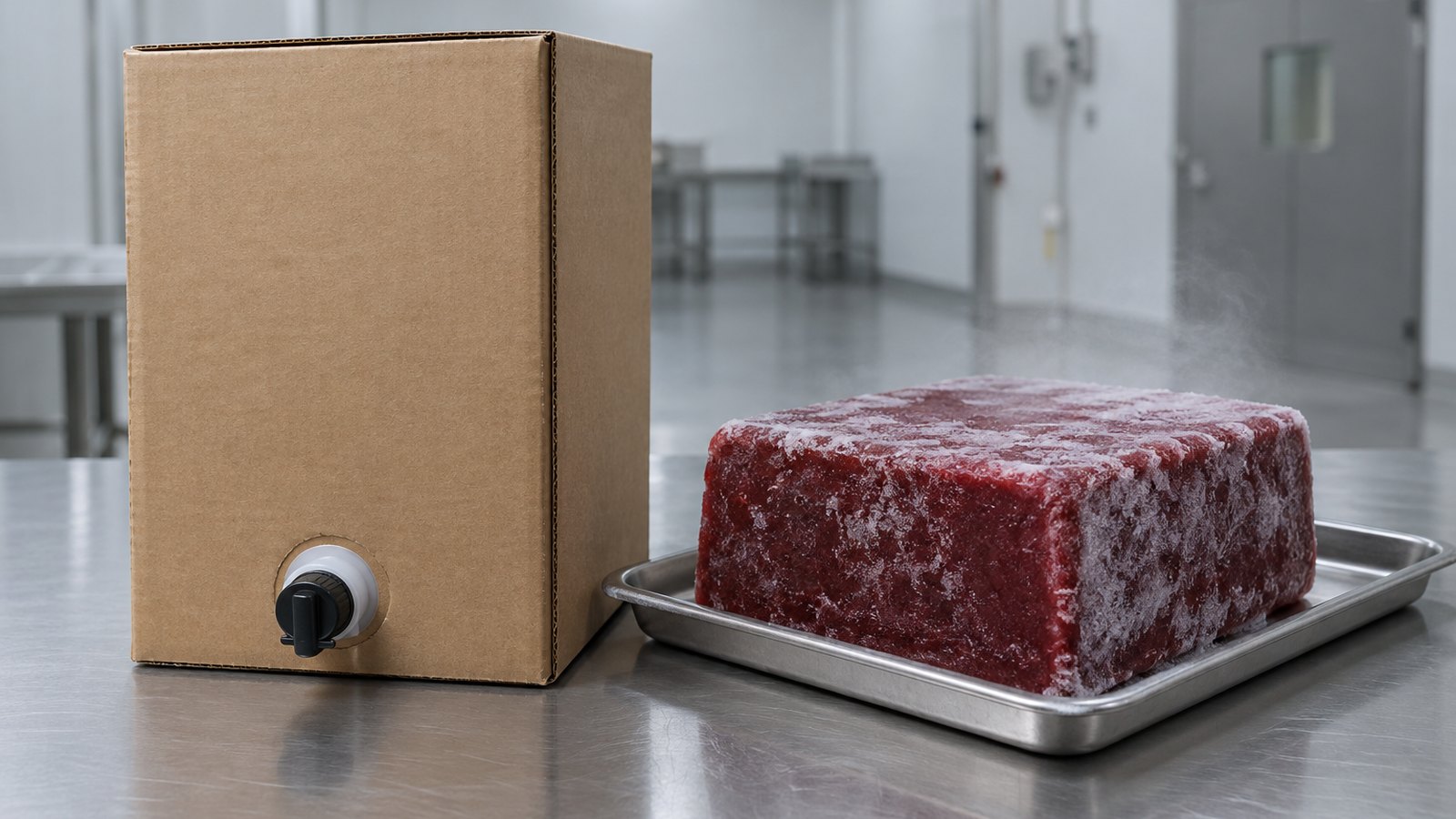
The two formats
A frozen purée is pulped and frozen, usually in a 10 kg block or a lined carton, and held at −18 °C from the plant to your tank. Nothing heats it beyond the short pasteurising step some recipes need, so the flavour and colour that came off the pulper are close to what you thaw out.
An aseptic purée is pulped, heated briefly in a tube-in-tube steriliser, cooled, and filled into a sterile bag-in-box or drum in a sterile zone. Once it is sealed it is commercially sterile, so it travels and stores at ambient temperature until you open it.
What actually differs
The honest summary is that frozen keeps slightly more of the fresh character, and aseptic costs less to move and hold. Frozen purée arrives tasting closer to the fruit, particularly for delicate berries where aroma compounds are heat-sensitive; raspberry and strawberry show the difference most, apple and pear least. Aseptic purée has been through a heat step, so a trained panel can usually tell, but in a finished yogurt, ice cream or bakery filling the gap narrows to the point where most end consumers cannot.
Against that, frozen means reefer freight, a freezer at your end, thawing time before you can dose, and a hard limit on how long an opened block sits around. Aseptic means dry container freight, pallet storage in an ordinary warehouse, and a pack you can open and pump straight into the process. For a manufacturer without deep-freeze capacity, that difference decides the question on its own.
When frozen wins
Choose frozen when flavour fidelity is the product's selling point, when you already run a freezer and a thawing step for other ingredients, when your batches are large enough to use a whole block at once, or when your recipe needs a purée that has never been heat-treated because you are applying your own heat step later and do not want to cook the fruit twice.
When aseptic wins
Choose aseptic when you have no freezer, when your production runs are smaller or less predictable and stock has to wait, when you are shipping a long way and want a dry container, or when the line needs to open a pack and dose it immediately with no thawing window. For most overseas manufacturers buying from China, the landed cost per kilo of usable fruit works out lower in aseptic once freight and freezer time are counted.
What to tell us
Whether you have freezer capacity and how much, your batch size, how quickly an opened pack would be used, the destination port, and whether your own process applies heat. Those five answers usually settle the format before we talk about fruit at all.