Fruit content
Fruit content is the first number to fix because everything else adjusts around it. A stirred yogurt typically carries a preparation dosed at 10–15 % of the cup, and the preparation itself is built to a fruit content that gets you to the fruit declaration you want on the finished pack. Work backwards from the label claim you intend to make in your market, not forwards from a preparation you liked the taste of.
Brix and the culture
Brix is where dairy differs from every other application. In a fermented product with live cultures, a preparation that is too sweet pulls water out of the system and slows the culture; in our experience the workable window for cultured dairy sits around 8–12 °Bx for the finished blend, and the preparation is set so that dosing lands you inside it. If your product is heat-treated after fermentation the constraint relaxes, and sweetness becomes a taste decision rather than a process one.
pH
A yogurt base sits acidic, usually between pH 4.0 and 4.6. A preparation that is far off that will shift the cup's pH when it is stirred in, and you will see it in texture and in how the colour holds over shelf life. Matching the preparation's pH to the base is routine; telling us the base's pH at the point of dosing is the part people forget.
Piece size
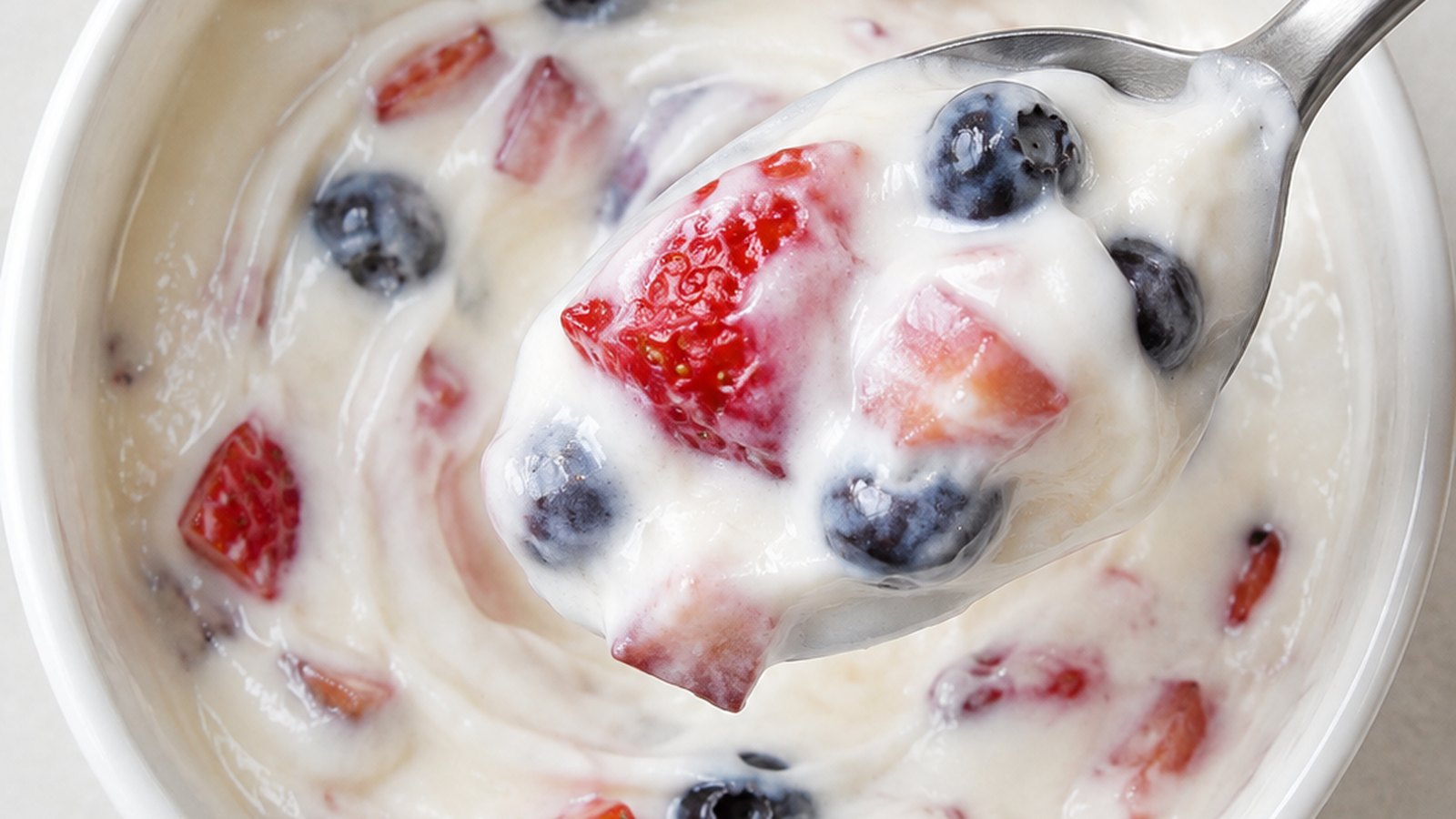
Piece size is a cup decision. Drinking yogurt needs pieces small enough to clear a straw and a filling nozzle, usually a fine dice or none at all. A stirred cup takes 6–10 mm comfortably. A fruit-on-the-bottom layer or a premium spoonable cup can carry larger pieces, and that is where visible fruit does the most work for the brand. Larger is not automatically better: the piece has to survive your pump.
Viscosity and suspension
The preparation has to be thin enough to pump on your dosing line and thick enough that pieces stay suspended rather than settling to the bottom of the tank during a run, or floating to the top of the cup during shelf life. This is the single most common reason a preparation that tasted right in the lab fails on the line, and it is why we ask what dosing equipment you use before we build a recipe.
Colour over shelf life
In a white dairy matrix, fruit colour migrates. Strawberry and raspberry bleed into the white phase over weeks; blueberry holds better. If your cup is layered and the visual contrast is part of the product, say so early, because the recipe that holds the line is not the same as the one that tastes best on day one.
What a useful specification contains
Fruit content, Brix, pH, piece size and distribution, viscosity at a stated temperature, colour reference, microbiological limits, allergen statement, pack and shelf life. Ours states each of those per product, and the certificate of analysis reports the measured values per lot.